Many couples think a wedding party with a volume limit automatically means a bad atmosphere. The opposite is true: When I am as DJane When I'm forced to work with less volume, my set becomes more precise and musically stronger.. The problem is not the decibel limit itself, but that it is usually considered far too late.
In this post, I'll show you why volume limitation starts with the location choice, how I work with it technically and musically, and what you need to clarify weeks before the wedding so that everyone is dancing and in a festive mood at the end.
Wedding party with volume limit – why it's not a problem, but an opportunity
Why a wedding party with a volume limit doesn't automatically mean a quiet party
I keep hearing it: „Our venue has a sound limit, will it still be a real party?“ The answer is simple: Yes, absolutely. And often even better than without limit.
Here's the point: Volume and party atmosphere are not the same thing. Many people think a good wedding party has to be loud because they've never experienced it differently. But when I, as a DJ, have to work with fewer decibels, something crucial happens. I become more precise. Every song has to be right, every transition has to be correct, every decision becomes more conscious. Bad songs or weak moments are immediately noticeable when I can't cover them up with volume.
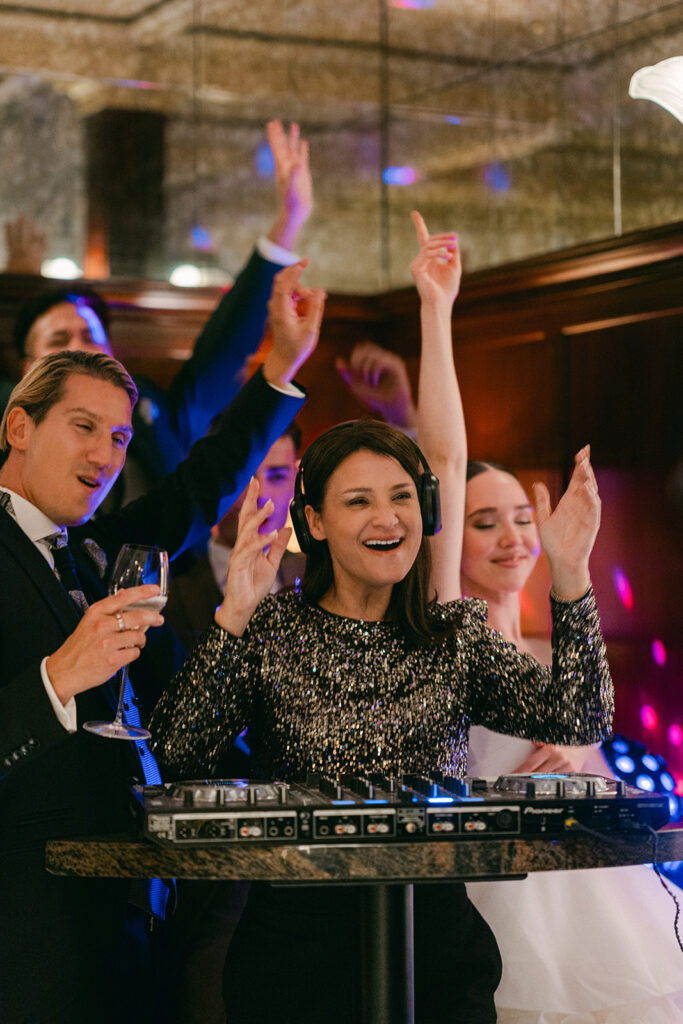
The feeling of energy has a lot more to do with how full the dance floor is, how well the moment is chosen, and how engaged the guests are. A full dance floor automatically feels more intense, even if technically less volume is being played. Perception is subjective. Not objective. And that's exactly what I'm using.
The biggest mistake is made even during the location selection.
The most common mistake I see couples make: They fall in love with a venue because of the look, the decor, the view. And then, at some point, they find out there's a noise restriction. Often only weeks later. Sometimes only after booking.
Volume limits are just as important in your decision as the food or the number of guests. If you book a venue without knowing if you can have a proper party there, you've already lost. It can be particularly useful to get support from an experienced Wedding planner to get someone who asks the right questions and avoids typical mistakes from the start.
Many wedding venues today have clear guidelines, especially in residential areas or for outdoor celebrations. Some have fixed measurement points, others work with time limits or resident complaints. If you don't know this in advance, Are you planning to go on a whim?.
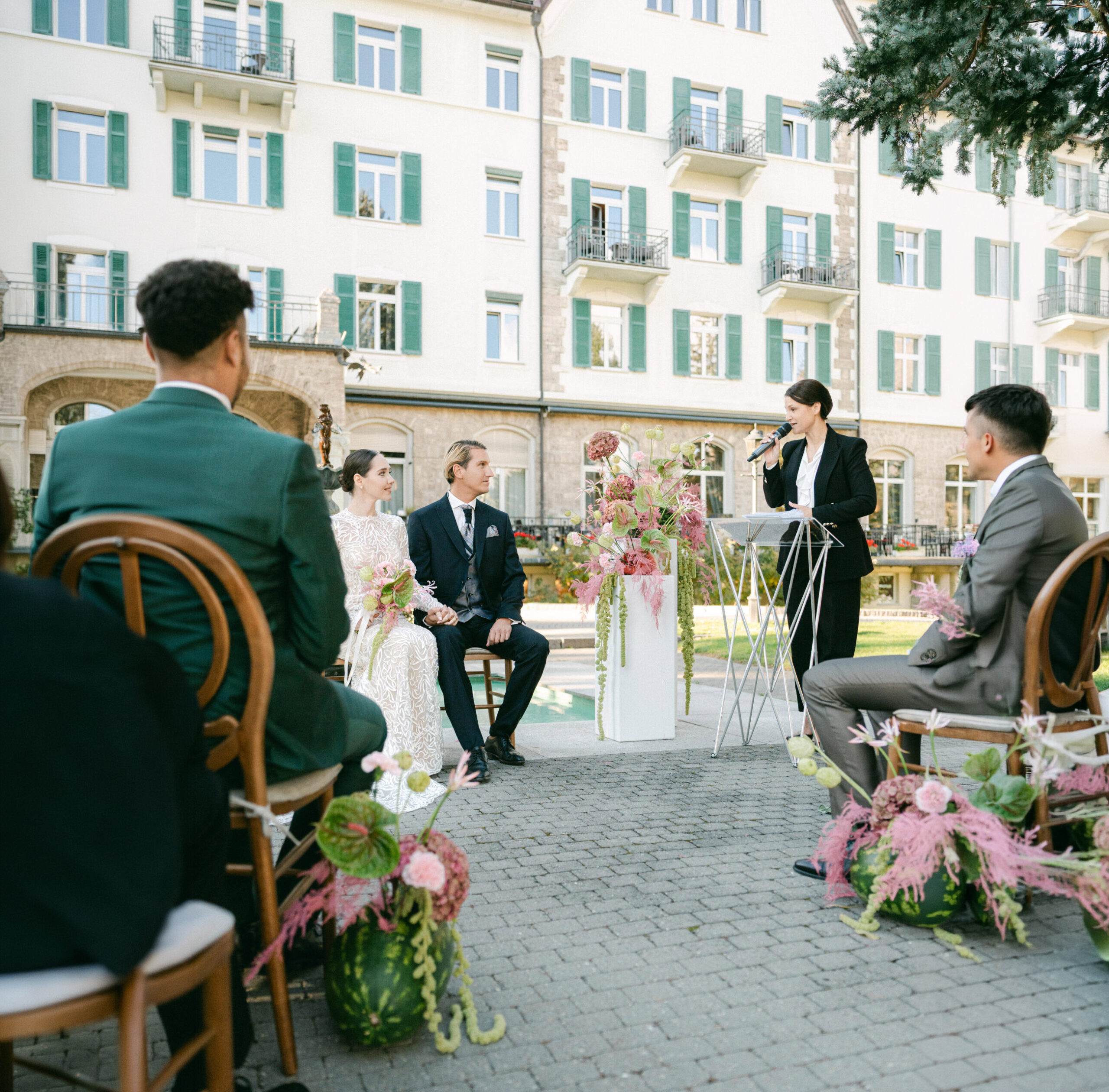
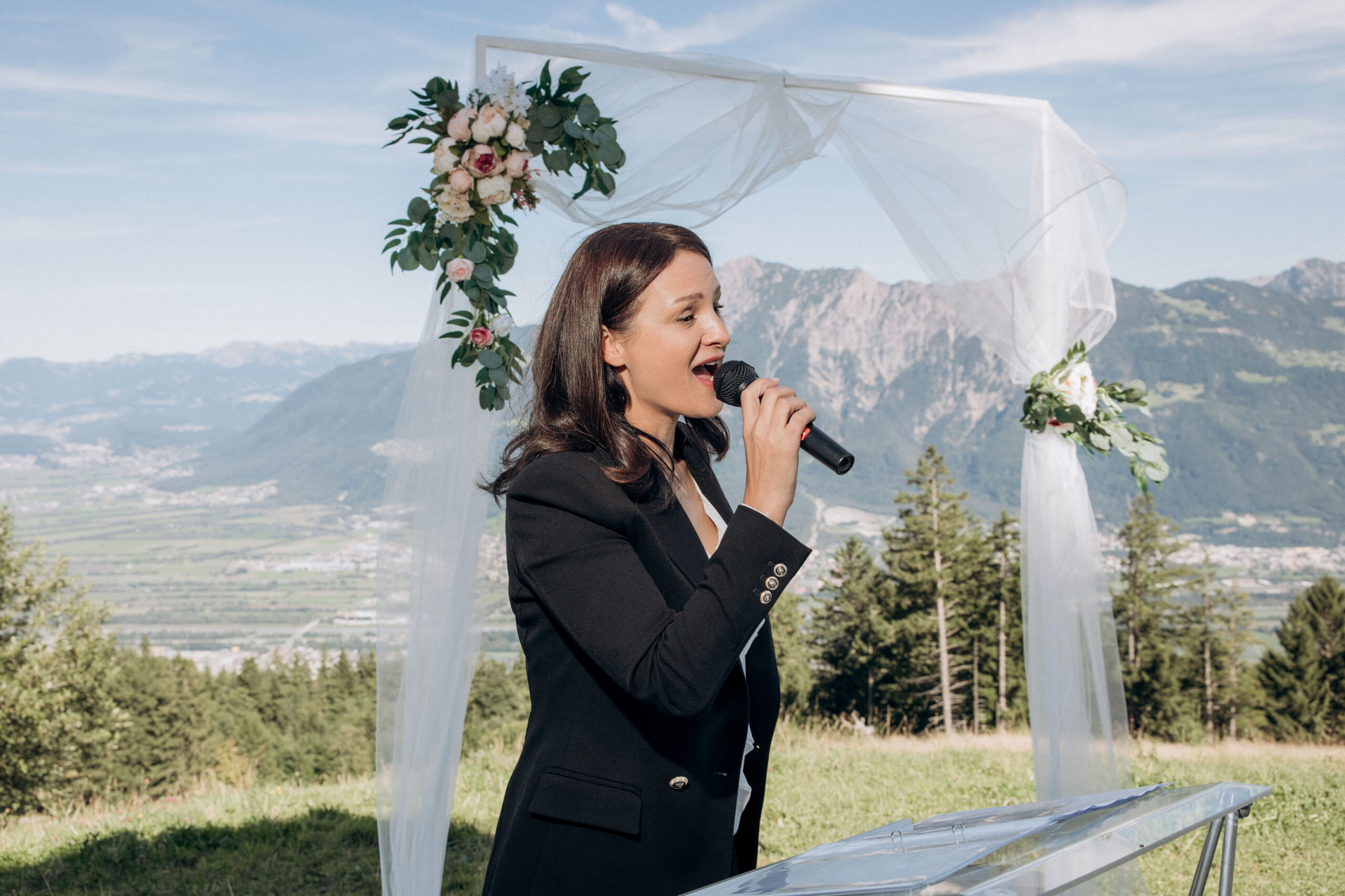
This concerns not only the party, but often also the free wedding ceremony. Especially when this takes place outdoors, there are sometimes already restrictions on music, microphones, or volume during the ceremony. Those who do not clarify this in advance risk having even this important moment unnecessarily restricted.
I'm not saying you should avoid locations with limitations. I'm just saying: You need to know. Then we can plan differently from the start. And then it will the limitation not an obstacle, but simply a framework.
What you need to sort out weeks before the wedding – not on the day itself
Volume limiting is Not a technical problem, but a planning problem. Anyone who only realizes on their wedding day that a decibel limit exists has a problem. The crucial work happens weeks beforehand.
You need to talk to your location. Not superficially, but concretely. Is there a limit? How high is it? Is it measured or is it just about complaints? Where is it measured? Are there times when it gets stricter? What happens if you are too loud? Will the music just be turned off Or is someone coming over?
I need this information as DJane, to plan your evening. Without them, I'm working blind. With them, I can specifically build a set that fits exactly within that framework. I can plan buffers, prepare alternative songs, and design the energy profile so that we never reach the limit. But still go full throttle.
In Switzerland, for example, noise levels are regulated by law. 93 decibels is the threshold at which an event becomes reportable.. 100 decibels is the absolute upper limit. These are not guidelines, they are limits. Anyone who thinks they can briefly exceed them risks the party being stopped. That's why I plan every wedding within these limits from the start.
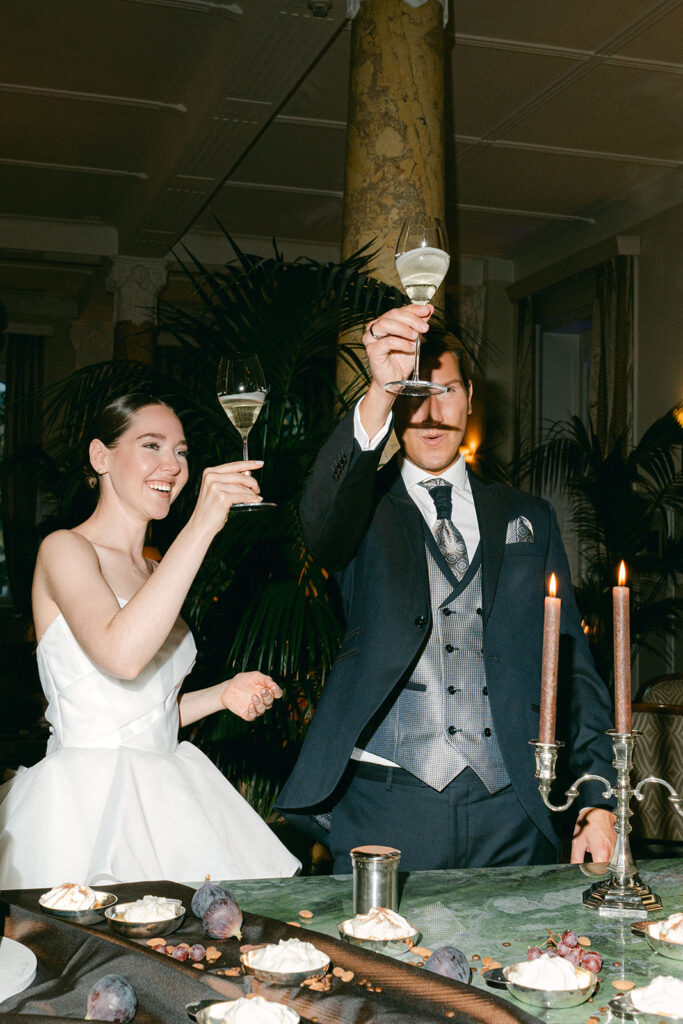
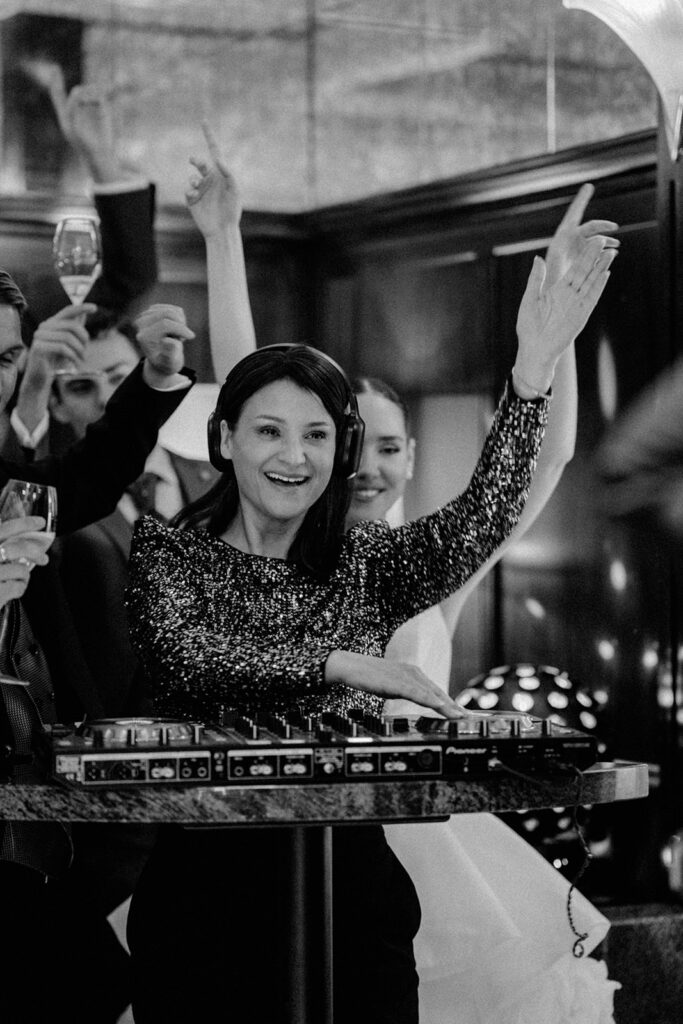
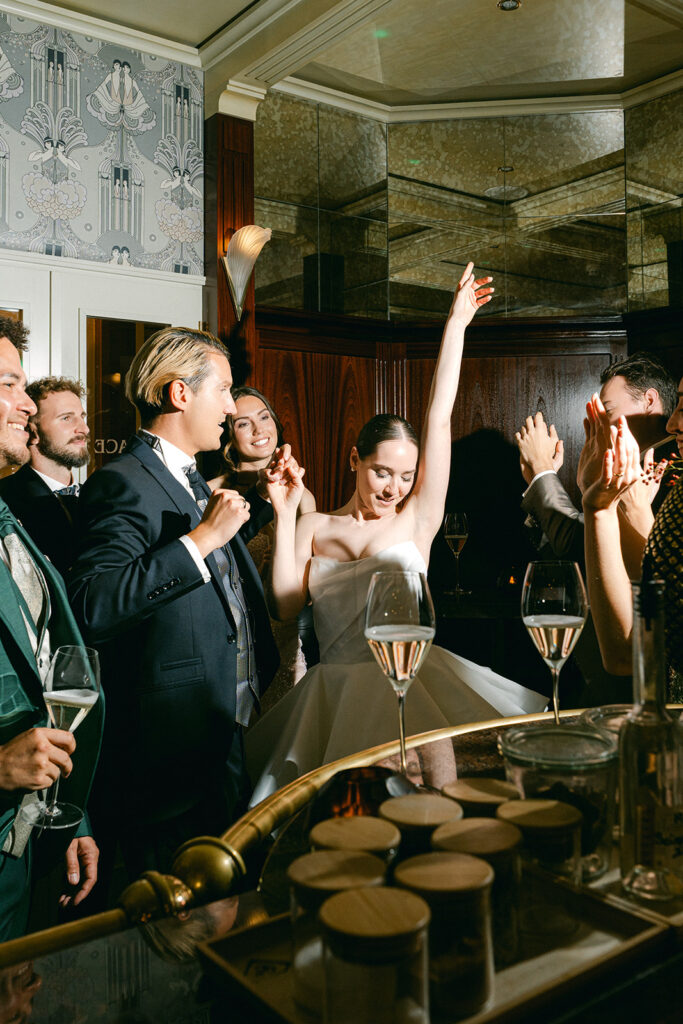
What sound limitation really means for your wedding party - and how I, as a female DJ, work with it
Why bass is your biggest enemy when using a decibel meter
The decibel meter does not measure what feels loud to humans.. It primarily measures low frequencies. So, bass. And that's exactly where the problem lies.
When a song has a fat bass beat, it drives up the measurement, even if the guests don't perceive it as particularly loud. Conversely, a song with less bass can feel intense to you, even though the measurement remains low. This is not a trick, this is craftsmanship.
I therefore deliberately work with the frequency distribution. When I notice that we are close to the limit, I'll reduce the bass slightly and emphasize the mids. The energy remains in the room, but the measurement value decreases. Your guests won't notice anything.
Speaker position beats volume – always
The position of my speakers is more important than the volume itself. If the sound is distributed incorrectly in the room, I automatically turn it up louder because I think it's not enough. But the problem lies elsewhere.
Good alignment ensures that the sound arrives exactly where it's supposed to: on the dance floor. Not on the ceiling, not in the corners, not by the buffet. If I do this right, it will feel intense for the guests, even though I'm technically running at a lower level.
The room must work, not the system
High ceilings, glass surfaces, open spaces: all of that eats sound. If I play in a room like that and ignore it, Am I fighting the venue all evening. And lose to the decibel meter.
That's why I always look at how the space behaves beforehand. Where are the walls? Where does sound get lost? Where can I specifically direct it? The space should help me, not work against me.
Why Light Becomes Enormously Important at Limited Volume
If I have less pressure on the system, I must the visual atmosphere carries the rest. Light is underestimated in this. A dark, focused room automatically creates more of a party atmosphere, even at lower volumes. Light directs attention, sets accents, and amplifies the energy I build musically. Without good light, I'm missing an important tool.
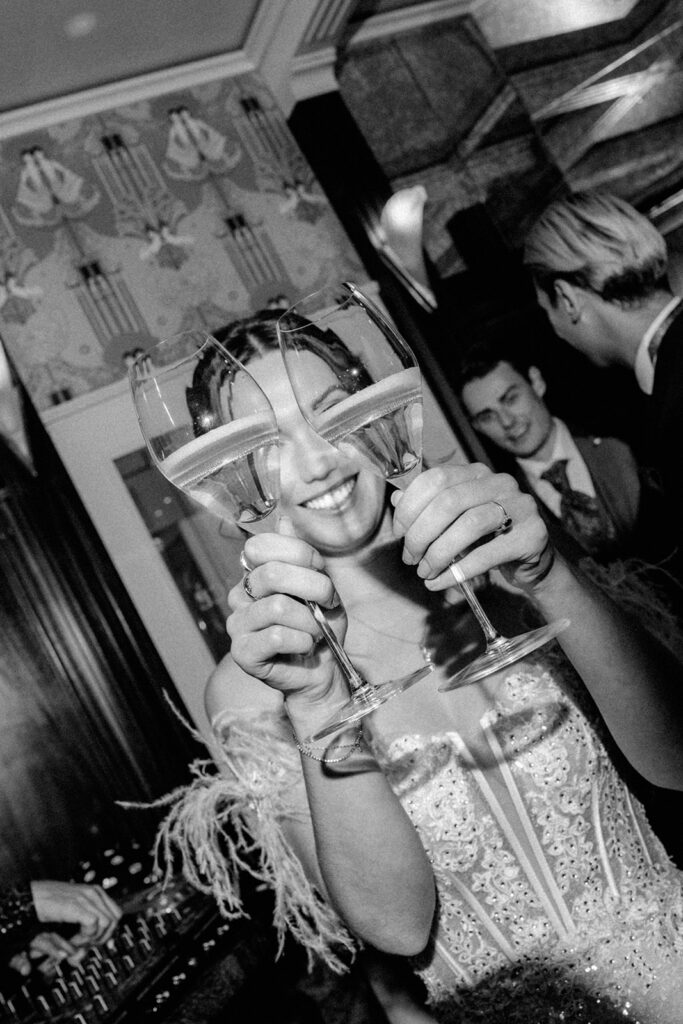
How to Handle Volume Limits as a Wedding DJ Without Killing the Vibe
Timing beats volume – the right song at the right moment
I can tell you from years of experience: A wedding DJ who only works on volume isn't a good DJ. The right song at the right moment gets a bigger reaction than a loud, average song. When Grandma and Grandpa have just left the dance floor and the young crowd is just warming up, that's exactly the moment for that one song everyone's been waiting for. It has nothing to do with decibels, but with seeing what's happening. The best atmosphere isn't created by volume, but by good timing.
Why I Think in Waves Instead of Peaks
The biggest mistake would be to go all out with the whole wedding party. It's not possible in Switzerland anyway because the decibel meter does not measure the moment, but the average over time. If I'm too loud at the beginning, I'll lack room to maneuver later on. That's why I always think in waves.
Small drops, targeted builds, deliberately set highlights. This way, energy stays high without me having to be loud all the time. I also consciously plan quieter phases where guests can catch their breath. It is precisely in these moments that what makes a wedding happen often occurs: Conversations, laughter, genuine connection.
Style shift as a game changer when energy shifts
Sometimes during the party, I notice the energy shifting. The dance floor empties a bit, the mood flattens. In those moments, turning up the volume does nothing. Instead, I rely on a surprising change of style.
From House to Latin, from Pop to Rock, from the 2000s to 80s classics. This trade brings people back because it's surprising. Suddenly other guests are engaged, suddenly there's new energy. This works extremely well with volume restrictions because I don't need more pressure, but more creativity.
I've already experienced weddings where a single well-placed change of style turned the whole evening around. And that completely independently of the decibels.
A full dance floor automatically feels louder
This is often misjudged: a packed dance floor automatically feels more intense. Not because I play louder, but because more people react, sing along, and move at the same time. The energy comes from participation, not decibels.
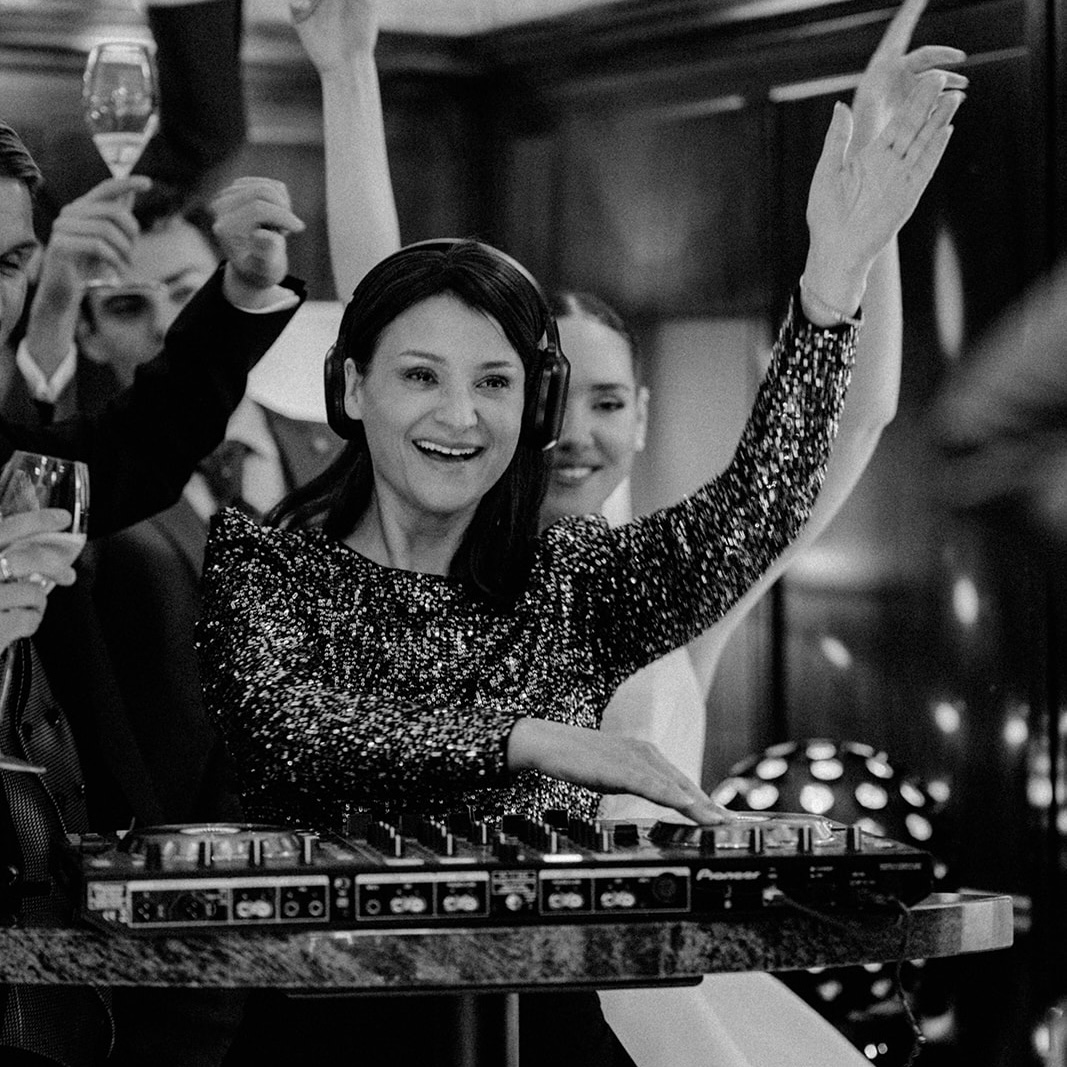
That's why Crowd density for me as DJane more important than decibels. If I can get everyone on the dance floor at the same time, I don't need technical volume anymore. The vibe then runs by itself. This is exactly where you can see if someone is a real DJ or just playing playlists.
Equipment and Preparation - Why I Always Consider Backup Strategies
If I know a venue has volume limits, I plan alternative set options One. More singalong-heavy tracks, deliberately reduced sections, songs with high emotional density instead of pure beats. That's my backup strategy.
Equipment determines the leeway. With cheap or borrowed setups, I have no control over sound distribution. That's why I always work with my own technique, which I know inside and out. This way, I can react precisely when the decibel meter becomes critical.
If you are currently planning your wedding and looking for a female DJ who is familiar with such circumstances, Feel free to get to know me without any obligation. In an initial conversation, we'll see if it's a good fit both personally and musically, and how your party can be brought to life.
Frequently Asked Questions About Weddings with Volume Restrictions
What do 93 dB and 100 dB specifically mean for our wedding?
93 dB is the threshold in Switzerland above which an event becomes reportable. From then on, it's no longer just about atmosphere, but about legal regulations. 100 dB is the absolute upper limit. Anyone who thinks they can just get through it is playing with the risk of the party being stopped.
How do I find out if our location has volume restrictions?
Ask the location directly. Many have fixed measuring points and clear specifications. Some municipalities add their own rules on top. Without this information, you're planning blind.
Can a wedding DJ create a good atmosphere despite limitations?
Absolutely. A good wedding DJ doesn't need volume to create energy. If the timing, song choice, and atmosphere are right, no one will notice that technically less gain is being used.
What happens if we are too loud – will the party simply be shut down?
That depends on the location. Some have automatic shutdowns, others send personnel. In any case, you risk an abrupt party cancellation. That's why preparation is so important.
Do we need different technology for volume limiting?
Not necessarily others, but High-quality technology makes the difference. Good speakers distribute sound in the room in a way that feels intense without the readings going up.
Conclusion: A wedding party with a volume limit is not a sacrifice – it's better craftsmanship
I've played many weddings with volume restrictions in recent years. And often, those were precisely the better evenings. Not *despite* the lower volume, but because I'm forced to work more precisely.
A wedding party with volume restrictions doesn't work through volume. It works through timing, song selection, and reading the room. That's precisely what determines whether the dance floor stays full or empties out.
In Switzerland, these limits are a reality. Those who ignore them risk the party being interrupted. Those who plan for them from the start, maintain control of the evening.
That's why this topic belongs in the planning. Check the location. Clarify the limits. Coordinate with the DJ. Then, a wedding party with volume restrictions won't be a problem, but rather a clear framework within which a successful party can emerge.
In the end, the volume doesn't matter. What matters is whether the dance floor is full.